

Introduction
Nuclear power plants require highly reliable equipment to maintain safe, stable, and efficient operations. Every component used in these facilities must perform according to strict technical requirements, particularly when it supports essential systems or operates in challenging environments. Valves are important parts of nuclear installations because they control the movement of water, steam, gases, and other process fluids. To operate these valves accurately, facilities often rely on specialized electric actuators designed for demanding industrial conditions. A Nuclear Grade Electric Actuator is engineered and qualified for specified nuclear applications, where dependable operation, environmental resistance, and long-term performance are essential considerations.
Unlike standard industrial actuators, equipment intended for nuclear service may need to withstand radiation, temperature variations, humidity, vibration, and other environmental stresses. Its suitability depends on the specific application, safety classification, qualification requirements, and operating conditions. Understanding its design, functions, benefits, and maintenance requirements helps engineers and facility managers make informed equipment decisions.
What Is a Nuclear Grade Electric Actuator?
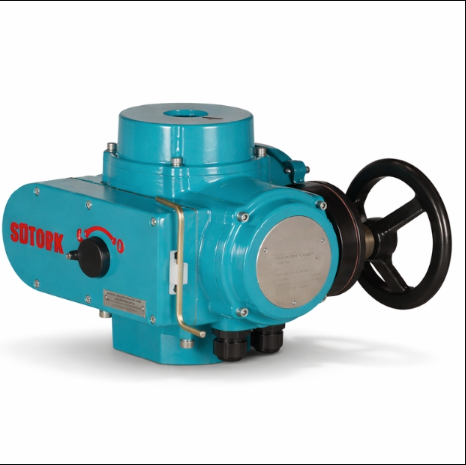
An electric actuator is a device that converts electrical energy into mechanical movement to operate a valve or another mechanical component. Depending on its design, it may produce rotary or linear motion. In nuclear facilities, actuators are selected according to the operating demands of the systems they serve, including the required movement, operating torque, control method, and environmental conditions.
A Nuclear Grade Electric Actuator is designed and qualified for a defined nuclear service application. Depending on the installation, it may support safety-related functions or operate in a non-safety-related system. This distinction is important because not every actuator installed in a nuclear power plant automatically qualifies as nuclear safety-grade equipment. Qualification requirements are established according to applicable regulations, engineering standards, plant specifications, and the component’s intended function. These requirements help demonstrate that the equipment can perform its assigned task under the conditions identified for its service.
Key Features of Nuclear Electric Actuators
Reliability is one of the most important considerations when selecting actuators for nuclear environments. These devices may include robust motor assemblies, carefully selected internal components, position indicators, torque switches, limit switches, and control interfaces. Depending on the model, additional features may include manual operation mechanisms, protective enclosures, and diagnostic capabilities.
Environmental qualification is another essential consideration. Equipment intended for particular nuclear applications may require evidence of its ability to withstand specified temperature ranges, radiation exposure, humidity, seismic loads, or other environmental challenges. The exact requirements vary according to the location and function of the equipment. Manufacturers may also provide documentation covering design specifications, material traceability, testing procedures, and quality assurance. Together, these features and records help operators determine whether an actuator is appropriate for a particular installation rather than relying on general performance claims alone.
How Does a Nuclear Grade Electric Actuator Work?
The operating principle of an electric actuator begins when its control system receives a command to open, close, or position a valve. The electric motor converts electrical energy into rotational movement, which passes through a gearbox or other transmission mechanism. This arrangement provides the torque or thrust needed to move the valve according to its design requirements.
Position and torque monitoring mechanisms help control movement and prevent operation beyond specified limits. Depending on the configuration, the actuator may receive commands from a local control station, a plant automation system, or another approved control interface. Feedback signals can indicate valve position or operating status to the control system.
For safety-related applications, the complete operating arrangement must meet the requirements established for the assigned function. This includes considering power availability, control logic, failure behavior, and any required response during abnormal conditions. Proper integration is therefore as important as the actuator itself.
Applications in Nuclear Power Plants
Electric actuators support a range of valve operations throughout nuclear facilities. Their applications depend on the plant design, process requirements, and safety classification of the equipment. They may be used in cooling-water systems, auxiliary water services, steam-related installations, ventilation systems, and other process applications where electrically controlled valve movement is appropriate.
In certain installations, actuators operate valves that help regulate fluid flow, isolate equipment, or support maintenance activities. Other applications may involve systems that require precise positioning or remote operation. Each use presents different demands regarding speed, torque, environmental exposure, and control arrangements.
A Nuclear Grade Electric Actuator must therefore be selected for its intended duty rather than simply for its general industrial specifications. Engineers need to establish whether the equipment is suitable for the particular system, including its location, operating frequency, required reliability, and applicable qualification criteria. This approach supports dependable performance throughout the facility’s operating life.
Importance of Safety and Environmental Qualification
Nuclear installations operate under demanding safety and quality requirements. Equipment qualification provides documented evidence that a component can perform its intended function under defined service conditions. Depending on the application, the evaluation may address electrical performance, mechanical strength, seismic qualification, radiation resistance, thermal aging, humidity, and other environmental factors.
Not every qualification test applies to every actuator. The required evidence depends on whether the equipment performs a safety-related function, where it is installed, and which standards and regulatory requirements govern the project. Environmental qualification may also need to account for specific accident conditions when relevant to the assigned function.
Documentation is a major part of this process. Engineering teams may review qualification reports, inspection records, manufacturing information, test results, and quality assurance documentation. These records help establish whether the supplied equipment matches the approved design and remains suitable for its intended service. Proper configuration control is equally important when components are repaired, modified, or replaced.
Benefits of Electric Actuation in Nuclear Facilities
Electric actuation offers several practical advantages when compared with alternative operating arrangements. One major benefit is the ability to control valve movement remotely, reducing the need for personnel to access certain operating locations. Electric systems can also integrate with plant control infrastructure, allowing operators to monitor equipment status and coordinate operations more effectively.
Another advantage is the potential for repeatable positioning. When properly designed and configured, an actuator can move a valve to defined positions and provide feedback to the control system. This can support process regulation, equipment isolation, and operating consistency.
Electric actuators may also reduce the need for dedicated pneumatic or hydraulic infrastructure for applications that are suitable for electric operation. However, their performance depends on electrical supply reliability, motor and gearbox design, control arrangements, and maintenance quality. Selecting an appropriate model requires a comparison of technical requirements, lifecycle costs, and operational limitations rather than assuming that one actuation technology is best for every nuclear application.
Materials, Construction, and Design Considerations
Material selection affects an actuator’s durability and suitability for its environment. Housing materials, seals, bearings, electrical insulation, lubricants, wiring, and electronic components must be appropriate for the specified operating conditions. For example, an actuator exposed to elevated radiation levels may require specially evaluated materials, while equipment installed in humid or corrosive areas may need suitable enclosure protection and corrosion-resistant construction.
Mechanical design is equally important. Gearboxes and drive mechanisms must deliver the required torque or thrust without exceeding component limits. Mounting arrangements must be compatible with the valve, and the complete assembly must accommodate the forces and movements expected during operation.
A Nuclear Grade Electric Actuator should be evaluated as part of the entire valve assembly. Valve friction, differential pressure, operating temperature, and potential degradation can influence the required actuator capacity. Engineers should also consider available installation space, cable routing, accessibility, and future maintenance needs. A carefully matched design can help minimize operational problems and support consistent equipment performance.
Selecting the Right Actuator for a Nuclear Application
Choosing an appropriate actuator begins with understanding the valve’s function and the conditions in which it will operate. Engineers should identify the valve type, required torque or thrust, operating time, travel range, duty cycle, power supply, and control interface. Environmental conditions and the applicable equipment classification must also be established before selecting a model.
Qualification documentation should be reviewed against the actual project requirements. This may include environmental and seismic qualification, electrical characteristics, material information, quality assurance records, and manufacturing traceability. Where safety-related service is involved, the equipment must satisfy the relevant procurement and qualification requirements.
Compatibility with the valve and control system is another important factor. An actuator that meets general performance specifications may still be unsuitable if its mounting, operating limits, feedback signals, or failure response do not match the application. Consulting qualified engineers and the equipment manufacturer can help confirm the required configuration and reduce the risk of costly installation or commissioning issues.
Maintenance and Inspection Requirements
Preventive maintenance helps preserve actuator performance and identify developing problems before they affect plant operations. Inspection programs may include checking the housing, mounting hardware, electrical connections, cable entries, position indicators, switches, and manual operating mechanisms where provided. Maintenance teams may also assess gearbox lubrication, abnormal noise, overheating, vibration, and signs of moisture or corrosion.
The appropriate inspection interval depends on the manufacturer’s recommendations, operating experience, equipment classification, and plant maintenance program. Testing should be planned so that it does not interfere with essential plant functions or compromise equipment availability. For safety-related equipment, maintenance and testing must follow approved procedures and applicable plant requirements.
Records of inspections, adjustments, repairs, and test results provide useful information about equipment condition over time. Any replacement component or modification should be evaluated for compatibility with the approved configuration and qualification basis. A structured maintenance strategy supports reliability while helping facilities manage aging equipment, spare parts, and long-term operational costs.
Challenges and Future Developments
Actuator technology continues to evolve through improvements in monitoring, materials, manufacturing, and control systems. Modern designs may provide enhanced diagnostic functions, more precise position feedback, and improved access to operating information. These capabilities can help maintenance teams identify abnormal behavior and plan interventions more effectively.
Nevertheless, introducing new technology into nuclear facilities requires careful evaluation. Electronic components, communication interfaces, software, and replacement parts must be assessed against the applicable environmental, cybersecurity, qualification, and plant integration requirements. A newer product is not automatically suitable for an existing nuclear installation simply because it offers more advanced features.
Long-term support is another consideration. Nuclear facilities often require equipment to remain serviceable over extended operating periods, making documentation, spare-part availability, configuration management, and manufacturer support particularly important. Future improvements will be most valuable when they enhance maintainability and reliability without undermining the qualification and quality requirements associated with the equipment’s intended function.
Conclusion
Electric actuators play an important role in controlling valves and supporting reliable operations across nuclear facilities. Their effectiveness depends on suitable mechanical design, dependable electrical operation, environmental compatibility, and appropriate integration with plant systems. Equipment intended for nuclear service must be selected according to its specific application, safety classification, and qualification requirements.
A Nuclear Grade Electric Actuator can offer benefits such as remote operation, repeatable positioning, and integration with control systems when correctly specified and maintained. However, reliable service requires more than choosing a product with a specialized label. Engineers must verify technical compatibility, review qualification documentation, follow approved maintenance procedures, and manage modifications carefully. By addressing these considerations throughout procurement, installation, operation, and maintenance, nuclear facilities can support dependable valve control and long-term equipment performance.