

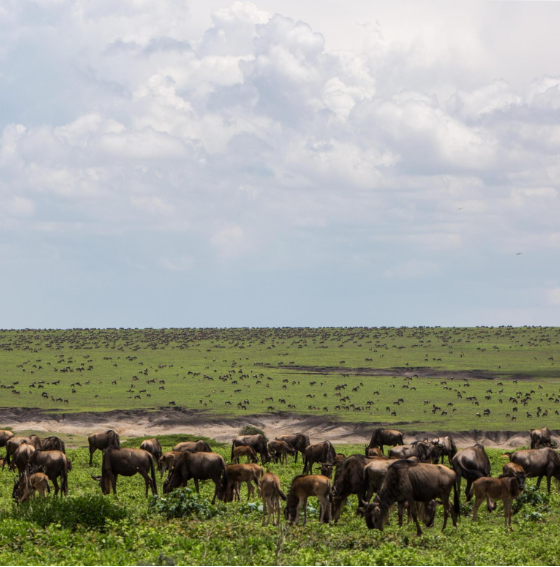
Each year, more than a million wildebeest sweep across the Serengeti in search of fresh grass and water, trailed by zebras, gazelles, and a cast of predators. Watching that movement unfold is the reason many travelers book a trip to Tanzania. But Serengeti wildebeest migration tours differ greatly in style, quality, and value, and the tour you choose will shape what you actually see.
This guide compares tour formats, explains what to look for in an operator, and helps you decide which approach fits your budget, comfort level, and goals.
What a Wildebeest Migration Tour Really Offers
A migration tour is a guided safari timed and routed to place you near the herds. Because the animals travel in a rough circle through the Serengeti and into Kenya’s Maasai Mara, a good tour is built around where the wildebeest are likely to be during your dates, not around a fixed set of camps.
A quality tour typically includes:
- A licensed, experienced driver-guide with a 4×4 vehicle
- Park entry and concession fees, or a clear statement of how they are handled
- Accommodation positioned for the herds’ expected location
- Meals, drinking water, and often soft drinks
- Airport transfers and, on some tours, internal flights
The promise is access and knowledge. What no honest operator can offer is certainty: the herds respond to rain and grass, so even the best-planned tour involves some uncertainty.
Main Types of Migration Tours
Group Joining Tours
On a group tour, you share a vehicle and itinerary with other travelers. Departures are scheduled, prices per person are lower, and you meet fellow wildlife lovers. The trade-off is less flexibility: the group agrees when to leave a sighting, and the route is usually fixed. Group tours suit solo travelers and budget-conscious visitors who are comfortable with a shared schedule.
Private Tours
A private tour gives you your own vehicle and guide, with the itinerary shaped around your interests. You can stay longer at a river bank, start earlier for photography, or change plans when the herds move. Costs are higher per person, especially for solo travelers or couples, but the flexibility is a major advantage during river-crossing season, when patience pays off.
Camping Tours
Camping tours use basic or semi-permanent tents and shared facilities, often at public campsites inside the park. They are the most affordable way to stay within the migration areas and provide a close-to-nature atmosphere. Comfort is limited, so they suit adventurous travelers.
Lodge and Tented Camp Tours
Mid-range tours use lodges or comfortable tented camps with private bathrooms, hot water, and proper beds. They are the most popular format, balancing comfort and cost.
Luxury and Mobile Camp Tours
At the top of the market, tours may use exclusive camps or seasonal mobile camps that relocate with the herds. Guests enjoy small group sizes, refined cuisine, and sometimes private guides. Mobile camps are especially valued because they place you near the action without long daily drives.
Fly-In Tours
Fly-in tours use light aircraft between airstrips, saving hours of road travel. They are well suited to travelers with limited time or those heading to the remote north for crossings. Luggage limits and higher costs apply.
Choosing the Right Season for Your Tour
The herds are always in the Serengeti-Mara ecosystem, but what you see depends on the month.
January to March: calving tours. Tours centered on the southern plains and Ndutu focus on newborn wildebeest and predator action. Because there is no single river to wait at, this is considered a dependable period for wildlife viewing.
April to May: quiet green-season tours. Rains bring lush scenery and lower prices. The herds head north, and tours focus on the central and western regions.
June to July: western corridor tours. Tours around the Grumeti River can offer dramatic crossings with fewer vehicles, though timing varies from year to year.
July to October: Mara River tours. Tours in the far north focus on the famous river crossings. This is the most in-demand period, so book early.
November to December: return-south tours. A quieter, cheaper time when the herds move back toward the southern plains.
What Affects the Price of a Migration Tour
Tour prices vary widely, and understanding the main factors helps you compare quotes fairly.
- Accommodation type: Camping is cheapest, mid-range lodges sit in the middle, and luxury or mobile camps cost the most.
- Season: Peak months and calving periods command higher rates.
- Group size and exclusivity: Group tours reduce per-person costs; private tours increase them.
- Park fees: These make up a large share of the total, and rates differ by area and season.
- Transport: Road transfers are cheaper than flights, though they cost more in time.
- Length of stay: Longer tours often reduce the daily cost but increase the total.
Unusually low prices should raise questions. Check whether park fees, meals, and transfers are included, since a cheap headline price can become expensive after extras are added. Fees and regulations change, so confirm current figures with your operator before paying.
How to Choose a Reliable Tour Operator
Choosing the operator matters more than choosing the vehicle or the camp. Look for the following:
- Proper licensing. The company should be registered and licensed to operate in Tanzania.
- Experienced guides. Ask about guide training, languages spoken, and how long they have worked in the Serengeti.
- Clear itineraries and inclusions. A written, itemized itinerary shows professionalism.
- Vehicle quality. Safari vehicles should be well-maintained 4x4s with pop-up roofs and a window seat for each guest.
- Honest advice on timing. A good operator will tell you plainly if your dates are not ideal for crossings, rather than promising a guaranteed spectacle.
- Responsible practices. Fair pay for staff, community involvement, and respect for park rules are signs of an ethical company.
- Reviews and references. Read recent reviews on independent platforms and ask for contactable references.
Be cautious of operators who guarantee a river crossing on a specific day, demand full payment far in advance without clear terms, or are unwilling to share licensing details.
Questions to Ask Before Booking
A few direct questions can reveal a lot:
- Where do you expect the herds to be during my dates, and how do you adjust if they move?
- How many guests share a vehicle, and does everyone get a window seat?
- What is included in the price and what is extra?
- What are your cancellation and refund terms?
- How long are the daily drives, and how far is camp from the main sighting areas?
- What happens if a vehicle breaks down?
Serengeti wildebeest migration tours
Getting the Most Out of Your Tour
Once you have chosen a tour, small decisions can improve your experience.
Allow enough time. For migration viewing, at least three nights in the region where the herds are expected is wise.
Be flexible. Weather and animal movements shift plans. Guides may suggest changing the route, and trusting their judgment often pays off.
Prepare your gear. Bring neutral-colored clothing, a hat, sunscreen, binoculars, a camera with a zoom lens, and layers for cool mornings.
Respect the wildlife. Keep noise low, avoid blocking animals’ paths, and follow your guide’s instructions at river banks and sightings.
Take care of your health. Consult a travel clinic about vaccinations and malaria prevention, check entry requirements, and take out insurance covering medical care and evacuation.
Responsible Migration Tourism
Tours fund conservation, ranger patrols, and local livelihoods, but visitor behavior matters. Choose operators that follow park rules, limit vehicle crowding at crossings, and support local communities. Avoid companies that encourage vehicles to chase herds or disturb animals for a better photograph. Responsible tourism protects the migration for future generations.
Conclusion
The best Serengeti wildebeest migration tours is the one that matches your priorities and gives you the best chance of being in the right place at the right time. Decide first what you want, whether newborn calves, river crossings, or a quieter green-season experience, then choose a tour format, season, and operator that fits. Ask direct questions, insist on clear inclusions, and allow enough time in the field. The migration will not follow a schedule, but a well-chosen tour gives you the knowledge and flexibility to follow it.
Key Takeaways
- Migration tours range from budget group camping to luxury mobile camps and fly-in private safaris.
- Your tour’s timing and region matter more than its style: choose by season and herd location.
- Calving tours run roughly January to March; Mara River tours run late July to October.
- Private tours offer flexibility, while group tours lower the cost per person.
- No honest operator can guarantee a river crossing on a specific day.
- Compare quotes carefully, since inclusions and park fees vary.
- Verify licensing, guide experience, and cancellation terms before paying.
- Book early for peak months and follow responsible viewing practices.
Frequently Asked Questions
What is the best time for a wildebeest migration tour in the Serengeti?
There is no single best time. Late January to March suits calving, while late July to October suits Mara River crossings. April, May, and November offer quieter conditions and lower prices.
How long should a migration tour be?
Five to seven days is a good length, with at least three nights in the area where the herds are expected. Shorter tours can work but leave less room for changes.
Are group tours or private tours better?
It depends on your priorities. Group tours cost less and are sociable, while private tours offer flexibility and control over your schedule, which is helpful when waiting at river crossings.
Can a tour guarantee that I will see a river crossing?
No. Crossings depend on herd behavior and weather. Spending several nights in the north increases your chances, but any operator promising a guaranteed crossing should be treated with caution.
Do migration tours include park fees?
Many do, but not all. Always ask for an itemized quote that states whether park and concession fees, meals, drinks, and transfers are included.
Is it better to fly or drive on a migration tour?
Flying saves time and suits remote areas like the north, while driving offers scenery and lower costs. Many travelers combine the two.
How far in advance should I book a migration tour?
For peak periods, book many months ahead, because well-placed camps and experienced guides are in high demand.